How can health literacy become truly inclusive and accessible to everyone?
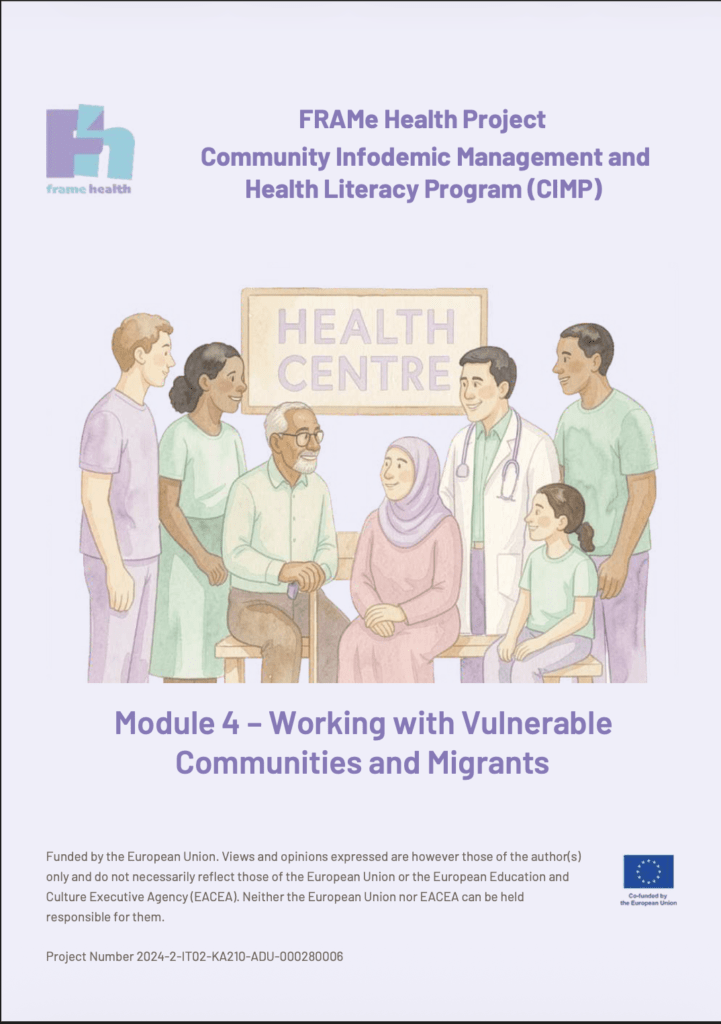
Providing health information alone is often not enough to support vulnerable communities. People may face a range of barriers when trying to access healthcare and reliable information, including language differences, cultural norms, administrative complexity, limited digital skills, and a lack of trust in institutions. These challenges are at the core of the fourth module of the Health Frame program, “Working with Vulnerable Communities and Migrants.”
The module explores how health literacy can be designed to be inclusive, practical, and accessible, particularly for migrants, low-income populations, older adults, and individuals who are frequently excluded from traditional communication channels. Participants gain insight into the social determinants of health literacy and learn how factors such as education, language, digital access, and institutional trust influence people’s ability to make informed health decisions.
A key focus is placed on cultural mediation and trust-building. The training highlights the role of cultural and health mediators in bridging the gap between healthcare systems and vulnerable populations by providing language support, explaining administrative procedures, addressing cultural differences, and helping individuals navigate healthcare services with confidence. Through practical examples from across Europe, participants discover how respectful, culturally sensitive communication can improve access to healthcare and strengthen community engagement.
The module also examines the importance of prevention, health monitoring, and digital empowerment. Participants learn how limited health literacy can affect preventive healthcare behaviours, why vulnerable groups are often disproportionately affected by misinformation, and how tailored communication strategies can support healthier communities. Special attention is given to participatory approaches that actively involve communities in the creation of health information and services.
The ultimate goal of the module is to equip participants with the knowledge and tools needed to overcome linguistic, cultural, and digital barriers, foster intercultural dialogue, and create more inclusive health communication practices. By the end of the training, participants will be better prepared to support marginalized groups, strengthen community resilience, and contribute to more equitable access to health information and healthcare services.